Your lights switch on every day, your outlets mostly work, and the breaker only trips once in a while. It's easy to assume everything is fine. But in many older homes around Delaware, Ohio, electrical systems can hide problems for years before they become obvious.
We've seen this firsthand after more than 16 years of serving homeowners throughout Delaware and the surrounding communities. A flickering light or a loose outlet isn't always just part of an older home's character. In many cases, they're early warning signs of aging wiring, overloaded circuits, or outdated equipment that no longer matches today's electrical demands.
Knowing what to look for can help you address small issues before they become expensive repairs—or worse, serious safety hazards.
Older Electrical Systems Were Built for a Different Era
Many homes built before the 1980s were designed for a lifestyle that looked very different from today's.
Families had fewer appliances, no home offices, fewer televisions, and certainly no electric vehicle chargers or dozens of devices charging every day. Electrical panels, branch circuits, and outlets simply weren't designed to handle the amount of electricity the average household now uses.
That doesn't automatically mean an older home's electrical system is unsafe. However, years of wear, previous renovations, and increasing electrical demand can expose weaknesses that weren't an issue decades ago.
For homeowners, recognizing those warning signs is often the first step toward preventing larger problems.
Small Electrical Problems Often Point to Bigger Issues
Electrical systems rarely fail without giving some kind of warning.
Instead, they usually develop subtle symptoms that homeowners learn to live with—until something finally stops working.
Lights That Flicker or Dim
Lights shouldn't noticeably dim every time you start the microwave or turn on a vacuum.
When they do, the circuit may be overloaded, wiring connections may have loosened over time, or the electrical service simply isn't keeping up with your home's needs.
Occasional flickering from a single bulb isn't always concerning. Repeated dimming throughout the home deserves a closer look.
Warm or Discolored Outlets
Outlet covers should remain cool during normal use.
If you notice:
- Brown or black discoloration
- Melted plastic
- Hairline cracks
- Warmth around the outlet or switch
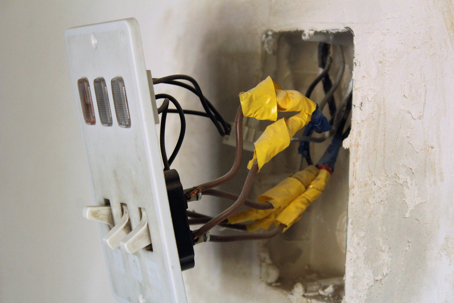
It's often a sign that excessive heat is building behind the wall.
Loose wiring connections create electrical resistance, and resistance creates heat. Left alone, that heat can damage wiring insulation and surrounding building materials.
Breakers That Trip Again and Again
Circuit breakers are designed to protect your home.
An occasional trip during heavy electrical use is normal. A breaker that trips every week—or several times in a single day—is telling you something else is wrong.
Common causes include:
- Overloaded circuits
- Aging wiring
- Faulty outlets
- Damaged appliances
- Electrical faults inside the circuit
Resetting the breaker may restore power temporarily, but it doesn't solve the underlying issue.
Buzzing or Crackling Sounds
Electricity should be silent.
Buzzing, sizzling, or crackling sounds coming from outlets, switches, light fixtures, or the electrical panel often indicate electrical arcing, where electricity jumps across gaps instead of flowing through secure connections.
According to the National Fire Protection Association (NFPA), electrical distribution equipment contributes to thousands of residential fires every year, making these sounds something homeowners should never ignore.
Wiring Types That Deserve a Closer Look
Some older wiring systems continue performing well when they're properly maintained.
Others have well-documented safety concerns and often become priorities during home inspections, insurance reviews, or remodeling projects.
Knob-and-Tube Wiring
Knob-and-tube wiring was commonly installed before the 1950s.
While innovative for its time, it presents several limitations today.
The system:
- Has no equipment grounding conductor
- Uses cloth insulation that becomes brittle with age
- Was designed long before today's electrical loads
As insulation deteriorates, conductors become more vulnerable to damage, increasing the possibility of overheating or accidental contact with combustible materials.
Many insurance companies also require additional inspections—or replacement—before providing coverage for homes with active knob-and-tube wiring.
Aluminum Wiring
Many homes built during the 1960s and early 1970s contain aluminum branch wiring.
Aluminum conducts electricity effectively, but it expands and contracts more than copper during heating and cooling cycles. Over time, that movement can loosen electrical connections.
The U.S. Consumer Product Safety Commission (CPSC) has reported that homes wired with aluminum branch circuits are significantly more likely to experience overheating at connection points than homes wired with copper.
Homeowners may notice:
- Flickering lights
- Warm outlets
- Burning odors
- Intermittent electrical problems
Proper repairs often require specialized connectors and installation methods rather than simply replacing an outlet or switch.
Cloth-Insulated Wiring
Cloth-insulated wiring is another common feature in older homes.
After decades of use, the fabric insulation can dry out, crack, or flake away, exposing the conductor underneath.
Even if the wiring still functions, deteriorated insulation reduces its ability to safely contain electricity and may require evaluation before major remodeling projects or electrical upgrades.
Your Electrical Panel Matters More Than You Think
Outlets and light switches tend to get most of the attention, but the electrical panel controls everything connected to your home's wiring.
When the panel is outdated or undersized, it affects the entire electrical system.
Older Fuse Boxes and Low-Amperage Service
Many older homes still operate with:
- 60-amp electrical service
- 100-amp electrical service
- Original fuse boxes
- Early-generation breaker panels
Those systems were sufficient decades ago, but modern households place much heavier demands on electrical infrastructure.
Today's homes commonly require 200-amp service to comfortably support HVAC equipment, kitchen appliances, entertainment systems, home offices, and future additions like EV chargers or hot tubs.
As homeowners add more electrical devices over time, older panels often become overloaded, leading to nuisance breaker trips and excess heat inside the panel.
Certain Older Panels Have Well-Documented Safety Concerns
The age of a panel isn't the only thing that matters. Some brands have a history of problems that continue to concern electricians, inspectors, and insurance companies.
Federal Pacific and Zinsco Panels
Two names frequently come up when evaluating older electrical systems:
- Federal Pacific Electric (FPE) Stab-Lok panels
- Zinsco panels
Both were installed in thousands of homes between the 1950s and 1990s. Investigations over the years found that some breakers in these panels may fail to trip during an overload or short circuit, allowing dangerous conditions to continue unnoticed.
Because of these concerns, many insurance carriers recommend further evaluation or require replacement before issuing or renewing a homeowner's policy.
Panels That Have Been Modified Over Time
Not every unsafe panel is tied to a specific manufacturer.
Homes that have been remodeled over several decades sometimes end up with electrical panels that have been altered beyond their intended capacity.
Electricians commonly find:
- Double-tapped breakers
- Incorrect breaker types
- Tandem breakers installed where they aren't approved
- Overcrowded circuits
These modifications may have worked for years, but they often create reliability and safety concerns that become apparent during inspections or when new electrical equipment is added.
Outlets Can Reveal What's Happening Behind the Walls
Sometimes, the easiest way to recognize an aging electrical system is by looking at the outlets throughout the home.
Two-Prong Outlets
Two-slot receptacles usually indicate an ungrounded electrical circuit unless a proper retrofit has been completed.
Without grounding, electricity has no dedicated path to safely travel during a fault. That increases the risk of electric shock and offers less protection for sensitive electronics.
Finding two-prong outlets doesn't necessarily mean every circuit needs immediate replacement, but it's a good reason to have the wiring evaluated before making upgrades.
Missing GFCI Protection
Modern electrical codes require Ground Fault Circuit Interrupter (GFCI) protection in areas where water and electricity are more likely to meet.
These locations include:
- Bathrooms
- Kitchens
- Garages
- Laundry rooms
- Basements
- Outdoor receptacles
Many older homes still lack this important safety feature because the wiring predates today's code requirements.
Adding GFCI protection can significantly reduce the risk of electrical shock in these locations.
Loose or Worn-Out Receptacles
If plugs constantly fall out of an outlet or the receptacle shifts when inserting a cord, the internal contacts have likely worn down over time.
Loose electrical connections create resistance, which produces heat. Even though the outlet may continue working, it could be signaling that replacement is needed before the problem worsens.
Electrical Problems Can Affect More Than Safety
Outdated electrical systems don't just increase the likelihood of repairs—they can also influence insurance coverage and real estate transactions.
Insurance companies often evaluate a home's electrical system when determining coverage. Older wiring methods, obsolete panels, or known hazards may lead to higher premiums, repair requirements, or limitations on coverage, depending on the insurer.
Electrical issues also tend to surface during home inspections.
Common findings include:
- Ungrounded outlets
- Obsolete electrical panels
- Aluminum wiring
- Knob-and-tube wiring
- Missing GFCI protection
- Improper electrical modifications
These discoveries can delay a home sale, prompt buyers to negotiate repairs, or require upgrades before financing can move forward.
Addressing electrical concerns before they become inspection issues often makes future projects and property sales much smoother.
When Is It Time for an Electrical Inspection?
Not every older home needs a complete electrical overhaul, but many benefit from a professional inspection.
Scheduling an inspection is a smart idea if:
- Your home is more than 40 years old.
- The electrical panel appears to be original.
- You're planning a renovation or addition.
- You're installing high-demand equipment like an EV charger or hot tub.
- You've noticed recurring electrical problems that don't have an obvious cause.
During an inspection, a licensed electrician can evaluate the panel, wiring, grounding, circuit protection, and overall condition of the electrical system. The goal isn't simply to identify what's outdated—it's to determine what still performs safely and what deserves attention before it becomes a larger issue.
Give Your Older Electrical System the Attention It Deserves
An older home comes with character, but its electrical system may be carrying decades of wear that isn't immediately visible. Flickering lights, aging wiring, outdated panels, and worn outlets are all worth investigating before they turn into larger problems.
If your home is showing any of these warning signs—or you simply want to understand the condition of your electrical system—We Power Electric LLC provides professional electrical inspections, panel upgrades, electrical repairs, and service upgrades for homeowners throughout the Delaware, Ohio area.
Call (614) 964-5544 today or schedule your electrical inspection through our contact page to get a clear picture of your home's electrical safety.